

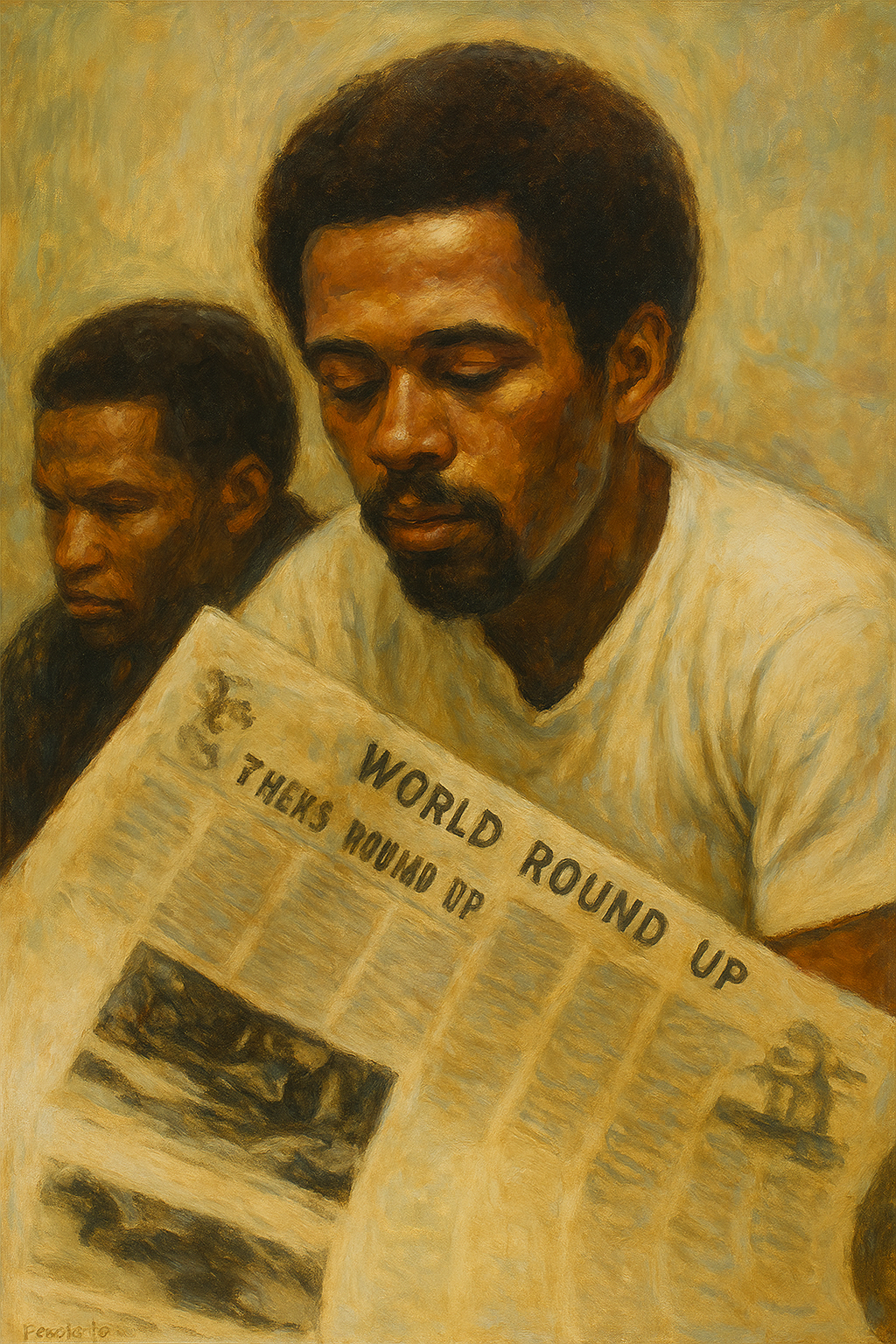
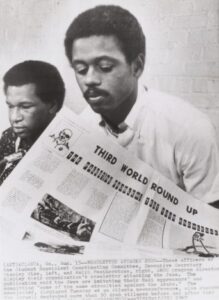
Stanley Wise and Ralph Featherstone, Newsletter, Atlanta Headquarters, 1966
Ralph Featherstone was more than just a civil rights activist—he was a symbol of a generation caught in the crosshairs of America’s struggle for justice and racial equality. His life, untimely death, and the questions left unanswered form one of the most enigmatic episodes in the history of the civil rights movement. Decades later, the circumstances surrounding his death continue to evoke suspicion and provoke debate.
Early Life and Activism
Ralph Featherstone was born in the 1930s and came of age during a period of profound racial transformation in the United States. He emerged as a promising figure within the Student Nonviolent Coordinating Committee (SNCC), one of the most influential civil rights organizations of the 1960s. SNCC played a crucial role in voter registration drives, sit-ins, and freedom rides—often on the front lines of dangerous confrontations with segregationist forces.
Featherstone quickly distinguished himself within SNCC for his articulate leadership, unwavering commitment to Black empowerment, and growing radicalism. As the organization evolved from its nonviolent roots to a more militant Black Power stance in the late 1960s, Featherstone remained at its ideological core. He was closely aligned with other prominent activists like Stokely Carmichael (Kwame Ture) and H. Rap Brown.
By 1970, Featherstone was serving as SNCC’s National Program Director and was known for advocating self-determination and challenging institutional racism in all its forms.
The Tragic End
On March 9, 1970, Ralph Featherstone and another SNCC activist, William Payne, were driving
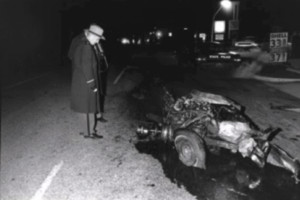
The destroyed remnants of Ralph Featherstone and William Payne following a car explosion.
near Beltsville, Maryland, en route to a courthouse in Bel Air. They were reportedly traveling to attend a hearing for H. Rap Brown, who had been indicted on arson and inciting a riot.
Around 1:45 a.m., their car exploded on a lonely stretch of Route 1. Both Featherstone and Payne were killed instantly. The charred remains of their bodies were found inside the vehicle, and the devastation of the blast left little to recover. What remained, however, was the mystery of what caused the explosion—and who might have been responsible.
Official Narrative vs. Public Suspicion
The initial investigation concluded that the two men were transporting a bomb that accidentally
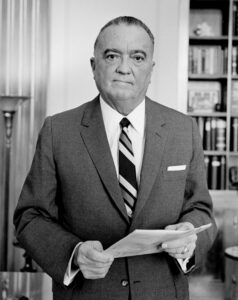
J. Edgar Hoover is the architect of misinformation campaigns structured to discredit and disrupt communities of color.
detonated. The FBI and local law enforcement maintained that Featherstone and Payne were likely planning an act of domestic terrorism—possibly to disrupt the hearing or make a political statement. This theory aligned with the broader narrative of increasing radicalism among Black activists, which was heavily promoted by the federal government during the COINTELPRO era.
But friends, colleagues, and many in the civil rights community fiercely rejected the official account. They described Featherstone and Payne as committed organizers, not saboteurs, and insisted they would never carry explosives. Moreover, SNCC leaders accused the FBI of orchestrating or at least covering up a targeted assassination.
Their suspicions were not without basis. During the late 1960s and early 1970s, the FBI’s COINTELPRO (Counterintelligence Program) actively surveilled, infiltrated, and attempted to neutralize Black activist groups through illegal and covert means. SNCC, in particular, had been a frequent target, and Featherstone himself was likely under constant surveillance.
The fact that Featherstone and Payne were driving to support H. Rap Brown—a man under intense government scrutiny and himself a COINTELPRO target—only deepened concerns that the explosion may have been a politically motivated killing disguised as an accident.
The Lingering Questions
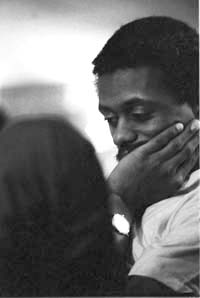
A photograph of Ralph Featherstone at a SNCC staff meeting in Atlanta 1966.
To this day, no conclusive evidence has emerged to confirm whether the explosion was an accident, a suicide mission, or an assassination. The case remains officially unsolved, and key documents from the FBI’s investigation have been withheld or heavily redacted.
For many, the deaths of Ralph Featherstone and William Payne symbolize the tragic costs of the Black freedom struggle and the murky, often dangerous interplay between dissent and state power. Their story is not just about how they died, but why their lives were seen as threats to the status quo.
Legacy
Though his life was cut short, Ralph Featherstone’s legacy endures. He remains a poignant reminder of the passion, complexity, and peril that defined the civil rights era. His death, wrapped in controversy and unanswered questions, challenges us to confront not only the truths of history but also the hidden mechanisms that may have shaped it from the shadows.
“The Serious Circumstance of Ralph Featherstone” is more than a historical mystery—it is a reflection on the risks borne by those who dare to speak truth to power, and the silence that too often follows in the wake of their absence.


