A Tragic Turnaround
The recent tragic events in both New York City and Washington DC, are sharp and palpable contradictions to the growth, inclusion, and progression promoted in urban renewal and redevelopment. The glistening new million dollar infrastructures alludes to once decaying cities now in revival.
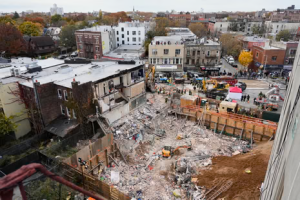
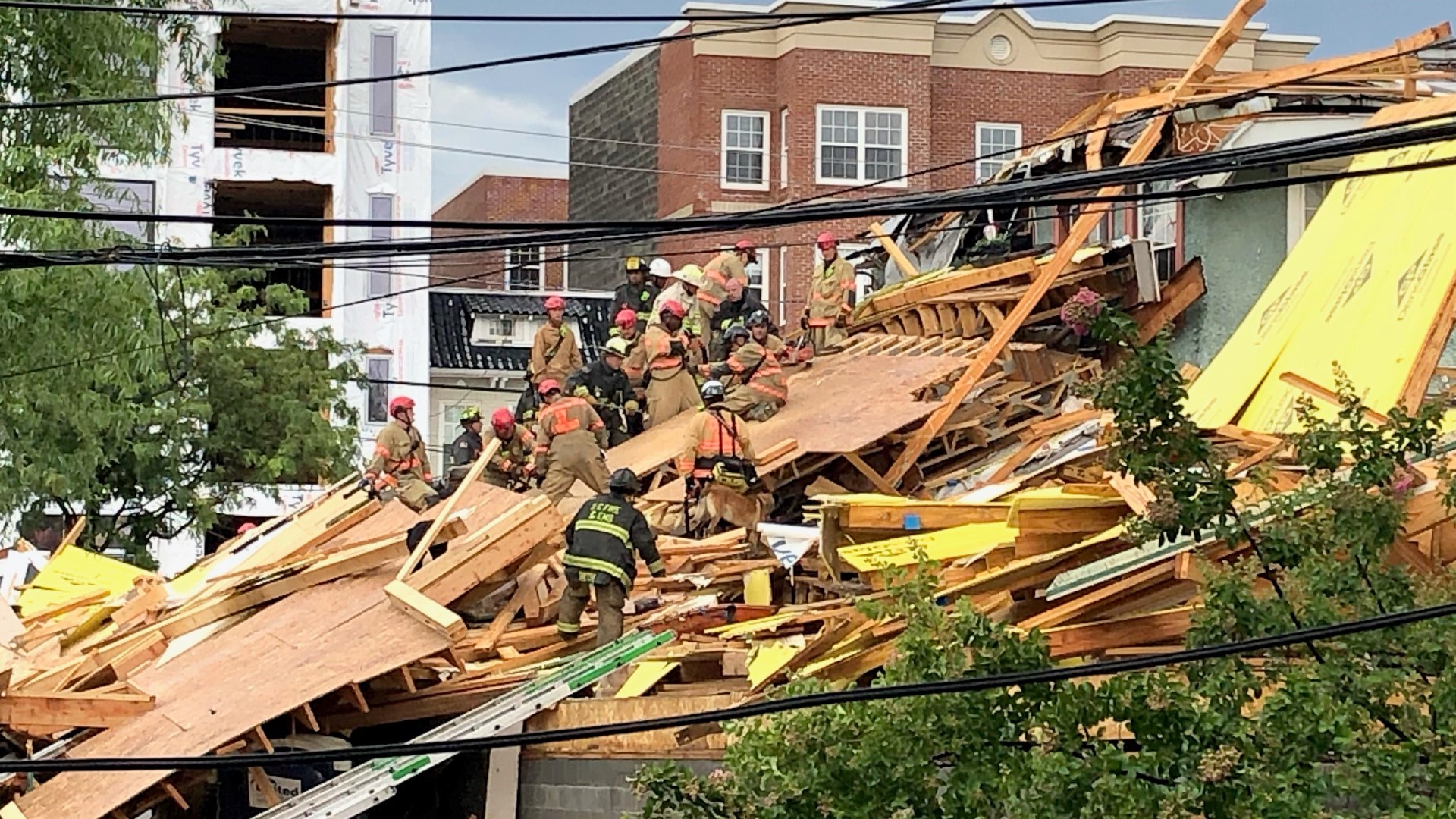
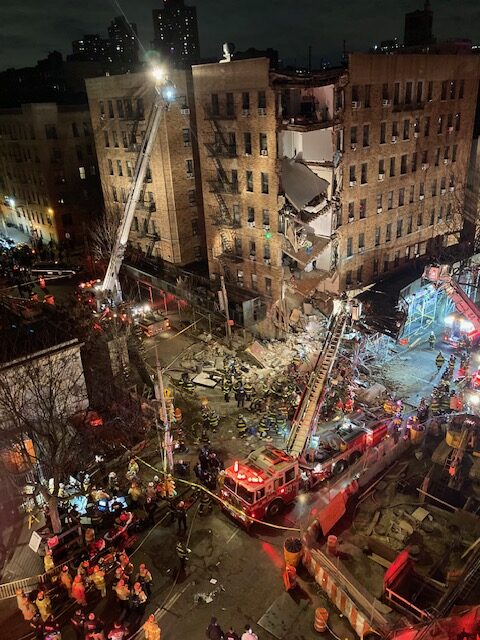
Image Courtesy Of The Guardian
So in turn, social programs, public safety, and affordability should be the expected result of such visible improvement, right? The apartment collapse in Brooklyn New York City on November 11, 2026 killing 8 and injuring 17, is a heartbreaking signal of how resources and attention have diverted from existing communities to pursue more profitable development in American cities. On November 12th, the following day, Dr. Matt Lambert walked into a VIDA gym in Logan Circle Washington D.C, and shot and killed his building manager James Stuart and then five others from his balcony before taking his own life. Prior to this event, Dr. Lambert had complained about water damage and black mold within the walls of his luxury apartment and had filed a lawsuit alleging that issues in his penthouse had made the property unusable.
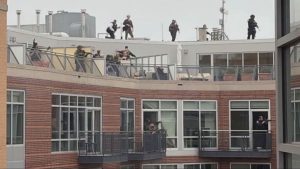
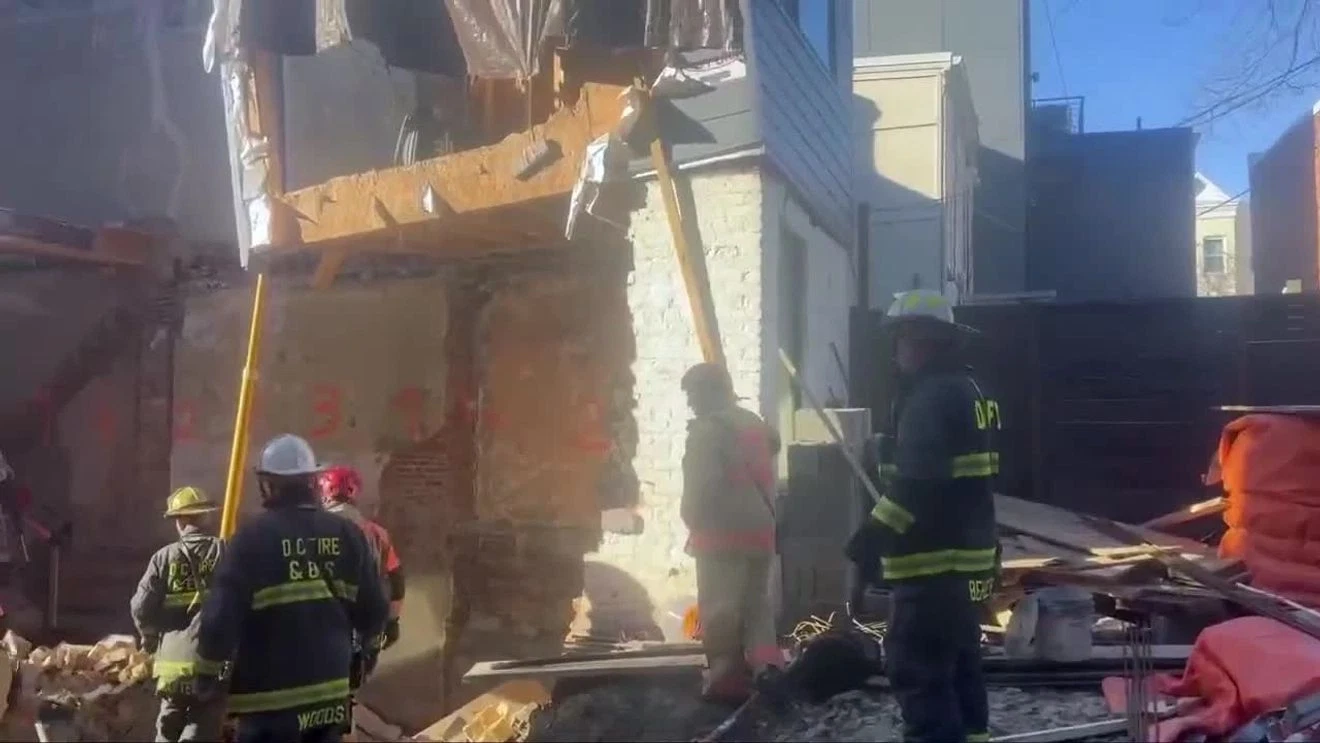
Image Courtesy Of NBC Washington.
His attorney described an extended conflict over how management handled his complaints. The murder of the building manager and the criminal investigation must be considered separately, and nothing about the legal dispute excuses the violence. But both tragedies must urge a deeper look into how urban renewal has been pitched as progress, yet buildings remain neglected, infrastructure deteriorates, and housing conditions decline despite rising property values. The end result raises a different question: Who actually benefits from neighborhood redevelopment, and who is left living with its consequences?
infrastructural collapses under mayoral leadership.
Muriel Bowser
Washington D.C
| Date and location | Incident | Victims and impact |
|---|---|---|
| May 1, 2015 — Watergate complex, 2600 Virginia Avenue NW | Three-story parking garage partially collapsed | Two construction workers injured; no confirmed deaths. |
| May 15, 2016 — Fenwick Street NE, Ivy City | Large portion of vacant building wall collapsed | No injuries reported. |
| June 12, 2019 — 1300 block of 13th Street NW | Partial collapse of a rowhouse under renovation | One construction worker seriously injured. |
| January 15, 2020 — 1102 Staples Street NE | Two-story building partially collapsed | No confirmed fatalities in the initial reporting. |
| July 1, 2021 — 916 Kennedy Street NW | Five-story building under construction collapsed during a storm | Five construction workers injured. |
| December 23, 2024 — 1111–1113 V Street NW | Partial collapse of a rowhouse undergoing demolition and construction | Construction worker Edgar Cifuentes-Lopez died. |
Sources:
The Washington Post+6
Eric Adams
New York City
| Date and location | Incident | Victims and impact |
|---|---|---|
| April 24, 2022 — 108-26 Avenue N, Brooklyn | Ceiling collapse during a three-alarm fire | Firefighter Timothy Klein, 31, died. |
| March 7, 2023 — 126 Lafayette Street, Manhattan | Wall and scaffold collapsed during demolition | One construction worker died; three injured. |
| April 18, 2023 — 57 Ann Street, Manhattan | Five-story parking garage partially collapsed | Garage manager Willis Morris, 59, died; five injured. |
| December 11, 2023 — 1915 Billingsley Terrace, Bronx | Partial collapse of an occupied seven-story apartment building | No deaths; reports document two minor injuries and more than 100 residents displaced. |
| February 2, 2024 — 1266 50th Street, Brooklyn | Residential construction floor collapsed into cellar | One construction worker, identified in reporting as Juan Ganche, 33, died. |
| October 1, 2025 — Mitchel Houses, Bronx | Boiler chimney partially collapsed following an apparent explosion | No deaths or injuries reported; residents were evacuated from affected sections. |
Mayoral Disfunction
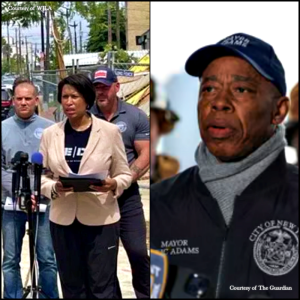
Mayor Muriel Bowser: Courtesy Of WJLA
Mayor Eric Adams: Courtesy Of The Guardian
These infrastructural catastrophes aren’t so much indictments on these mayor’s admins themselves. However, under these mayor’s leadership, much of the deteriorating dwellings that had been in disrepair for some time, and were in desperate need of attention had finally failed as adequate warnings had reached the appropriate offices with no action. This consistent lack of action now feels like a willing negligence as new real estate developers continue to put pressure on local housing markets.
A Crumbling Capital
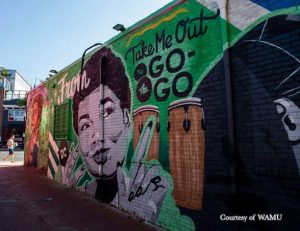
Gentrification’s affect on DC residents has been very particular and stingy at best. What’s peculiar, is the deeply rooted local cultures seem to have held on, and even leveled up amongst the communal disruption which has otherwise set itself upon the city. The “Don’t Mute DC” was needed to deflect noise complaints from new neighbors who find themselves in bustling night districts and commercial spaces where music, especially Go-Go plays at volume. The displacement of longtime residents has been a chronic issue in the city since the start of the redevelopment, exacerbating a homelessness crisis that has pulverized the city for generations. Tent encampments have become more present in neighborhoods, traffic tunnels, commercial spaces, even downtown amongst government buildings. Another reoccurring issue in the nations capital has been decaying and failing waterlines that haven’t been uprooted for the better part of 100 years. This prompts water warnings, urging the city’s residents to boil their tap water before usage, another long standing problem that has plagued Washington’s citizens for generations. More extravagant buildings go up across the city, while the waterlines underneath them rot and rupture.
A Rotting Apple
New York City has always been an attractive location for investors, developers, corporations and upper-class residents. Through the years, New York City has experienced a diverse spectrum of growth, even introducing recreational cannibis to the local economy. But the new expensive condominiums distract from the structural decay and the slumlord practices that plague New York’s citizens. Structural repairs, electrical problems persist while rent costs elevate. Tenants face evictions and tensions with property managers and police and uncertainty consumes communities, while their plight is hidden behind the attractive branding. What’s most dangerous is the human cost that hangs in the balance. And while investors line right pockets to close contracts, a fatal reckoning faces the overwhelmed lower-income taxpayers.
The recent collapse in Brooklyn, is the culmination of 98 outstanding violations against the property and cascading issues which the investigation into the tragedy may culminate.
-
City records reportedly showed 98 open housing violations at the collapsed property including leaks and bedbugs.
-
The neighboring construction site had previously received a stop-work order.
-
Inspectors had documented demolition work continuing in violation of that order.
-
Residents reportedly experienced weeks of shaking and construction noise.
-
The city is investigating whether excavation and inadequate structural protections contributed to the collapse.
Note: The contractors and companies connected to the construction site were reportedly associated with approximately 100 other projects across the city.
The November 11, 2026 collapse of an apartment building in Flatbush, Brooklyn, should force New York City to confront an uncomfortable question: Has the pursuit of redevelopment outpaced the government’s responsibility to protect existing residents?
RECOVERY
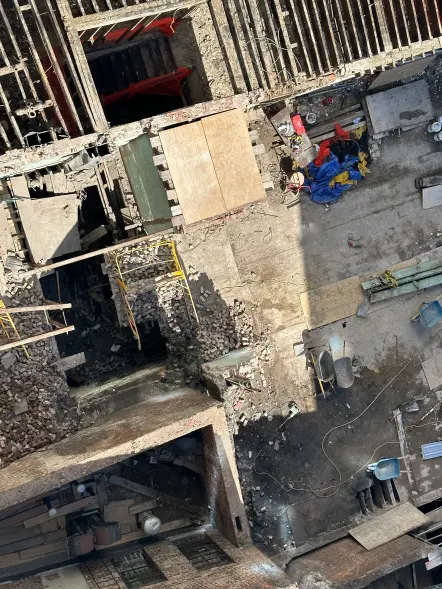
Courtesy Of WAMU
For decades, gentrification has been marketed as an opportunity for urban progress. New restaurants appear, commercial corridors receive attention, property values increase, and residential rents climb. City officials frequently describe these transformations as revitalization, economic development, and renewed investment. But there is another side to this transformation that deserves considerably more attention.
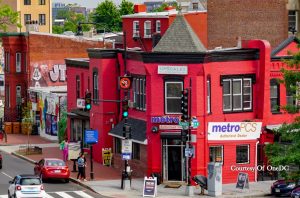
Behind renovated storefronts, expensive condominiums, and newly branded neighborhoods are apartment buildings with deteriorating plumbing, broken elevators, water damage, mold, inadequate heating, electrical problems, and structural deficiencies. There are residential properties where tenants continue to live with conditions that would be unacceptable in newly constructed developments.
Courtesy Of OneDC
There are aging buildings whose exterior appearance conceals years of deferred maintenance and neglect. This raises an uncomfortable question: What does it mean for a neighborhood to experience economic revitalization when the quality of life inside its residential buildings continues to decline?
New York City and Washington, D.C. offer important examples of this contradiction. Both cities have experienced significant neighborhood transformations, rising housing costs, changing demographics, and substantial real estate investment. Yet serious housing conditions remain present, including in communities that have experienced redevelopment and rising property values. Former Mayor Eric Adams cultivated a pro-business political identity, and his administration operated in a city where real estate interests wield enormous influence over zoning, housing policy, construction, and economic development.
Reports from “The Real Deal” in September 2025 documented substantial real estate industry support for Adams’s mayoral campaign. In July 2025, NY1 reported that employees of major real estate companies contributed significantly to his fundraising, including employees associated with SL Green and a $250,000 contribution from the head of Extell Development to a political fundraising effort. 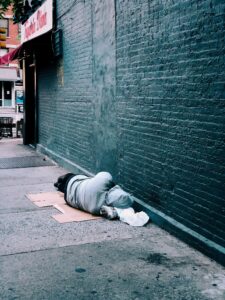 Adams’s administration also faced a major corruption investigation. Federal prosecutors charged him in September 2024 with bribery and campaign-finance offenses. A federal judge dismissed the case with prejudice in April 2025 after the Justice Department sought dismissal. The judge criticized the circumstances surrounding that request, but the dismissal was not a finding of guilt or innocence. Adams had denied the allegations.
In 2017, D.C’s Office of Campaign Finance investigated Mayor Bowser’s 2014 campaign. Her mayoral campaign raised approximately $3.63 million from all sources. Investigators examined contributions involving companies and individuals connected to real estate and construction.The official investigation identified excessive contributions involving:
-
Four Points LLC
-
Blue Skye Construction and Blue Skye Development
-
The Justin Company
-
Keystone Plus Construction
-
Foulger Pratt Contracting
-
Sanford Capital
-
Franklin Parking
-
Georgia Avenue Gateway
The final determination required $11,771 in excessive contributions to be refunded. The campaign was fined $13,000. 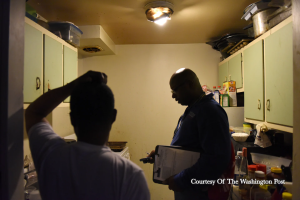 Not every donor initially identified in the complaint was found to have violated the law. This is especially relevant because Sanford Capital was subsequently involved in serious housing-code enforcement matters. Although this connection deserves deeper scrutiny, it does not establish that campaign donations caused any particular housing enforcement decision. Nor do these contributions establish that donors purchased government decisions. However, they illustrate the political influence that the real estate industry can exercise in municipal elections.
The larger question remains: how does a city ensure that public policy serves residents rather than becoming overly responsive to the interests of powerful financial contributors? Both New York and Washington, D.C., offer an important lesson about the consequences of redevelopment without sufficient accountability.
Under Eric Adams, New York’s political relationship with the real estate industry attracted scrutiny over campaign financing, government influence, and the distribution of public resources. Under Muriel Bowser, Washington’s development policies produced projects that raised questions about whether public subsidies were generating reasonable returns for taxpayers.
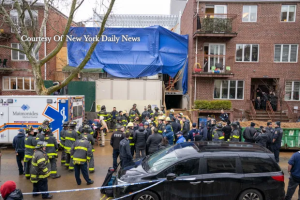
Image Courtesy Of New York Daily News
Neither city’s record should be reduced to a simplistic accusation that every developer is corrupt or every redevelopment project is harmful. But neither should political leaders be allowed to use the language of revitalization to avoid difficult questions about public accountability.
The recent Washington shooting adds another troubling dimension. A dispute involving mold, water damage, and building management ended in the death of a building manager and the wounding of four other people. It was an act of violence, not an indictment of every property manager or housing dispute. Yet it underscores how consequential unresolved building-management conflicts can become. Meanwhile, residents in less affluent neighborhoods continue to face unsafe housing conditions that should never have been tolerated in the first place.
The real measure of gentrification is not how many luxury buildings a city constructs, how much developers earn, or how impressive a neighborhood looks to outside investors. It is whether the people who already live there can afford to stay, live safely, and enjoy the benefits of their own city’s progress.
If taxpayers are expected to finance redevelopment, they should receive more than promises. They deserve safe housing, functioning infrastructure, accountable landlords, reliable public services, and neighborhoods where prosperity is shared. Otherwise, gentrification is not revitalization. It is the redistribution of opportunity away from the people who need it most.