

Disparaging Black Spaces
On the first day of Kwanzaa, there were many celebratory posts and images across social media platforms. But in the comment sections, a very awkward and insidious trend appeared. Mostly white people denouncing the legitimacy of the holiday and disparaging those who chose to recognize it. This seems to follow a pattern of harassment and agitation associated with bot networks and white supremacy viewpoints, which have been evermore prevalent over the past years.
A Facebook user or bot profile counteracting against a celebratory Kwanzaa post.
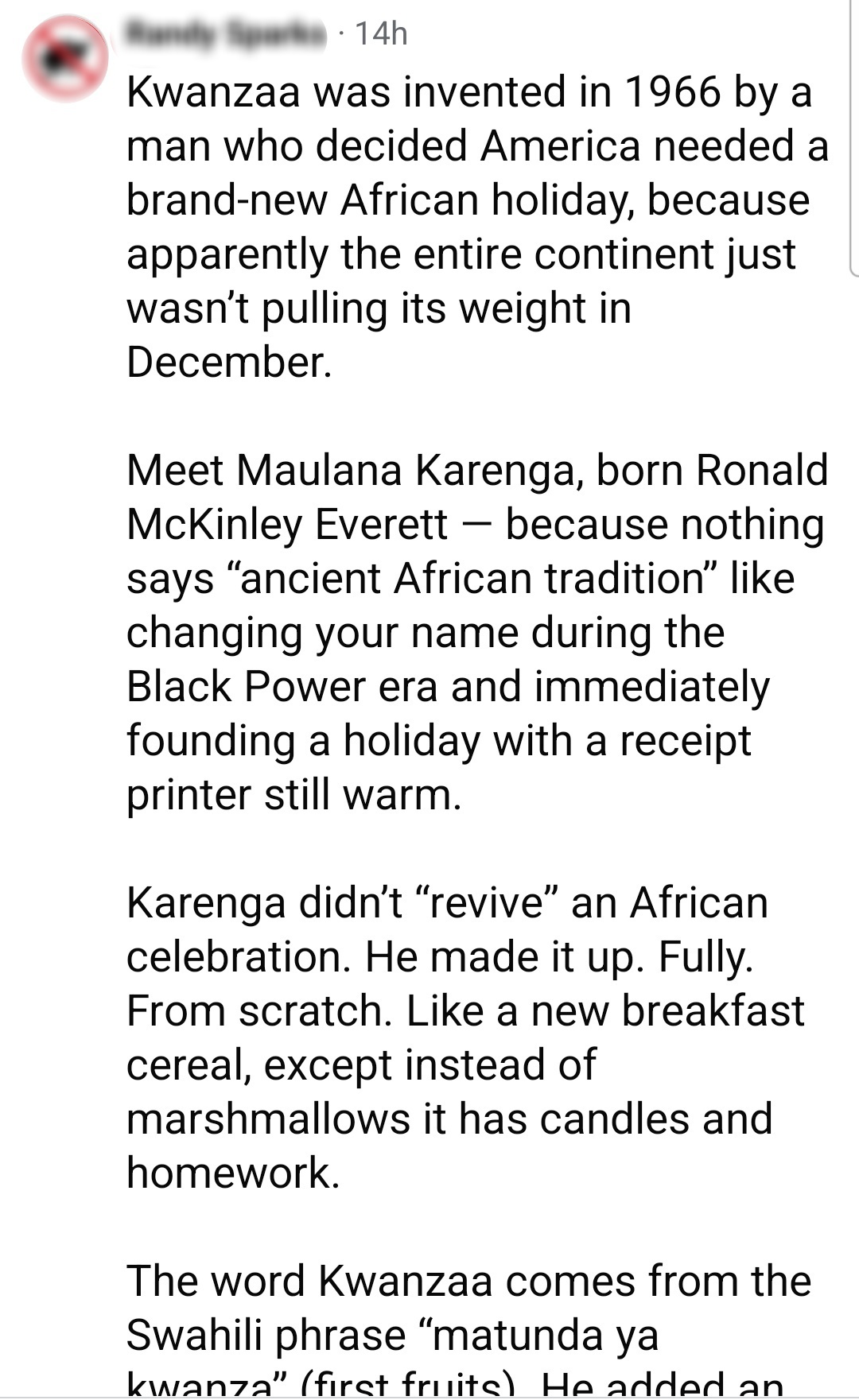
And another Facebook user or bot profile repeating the same messaging again….
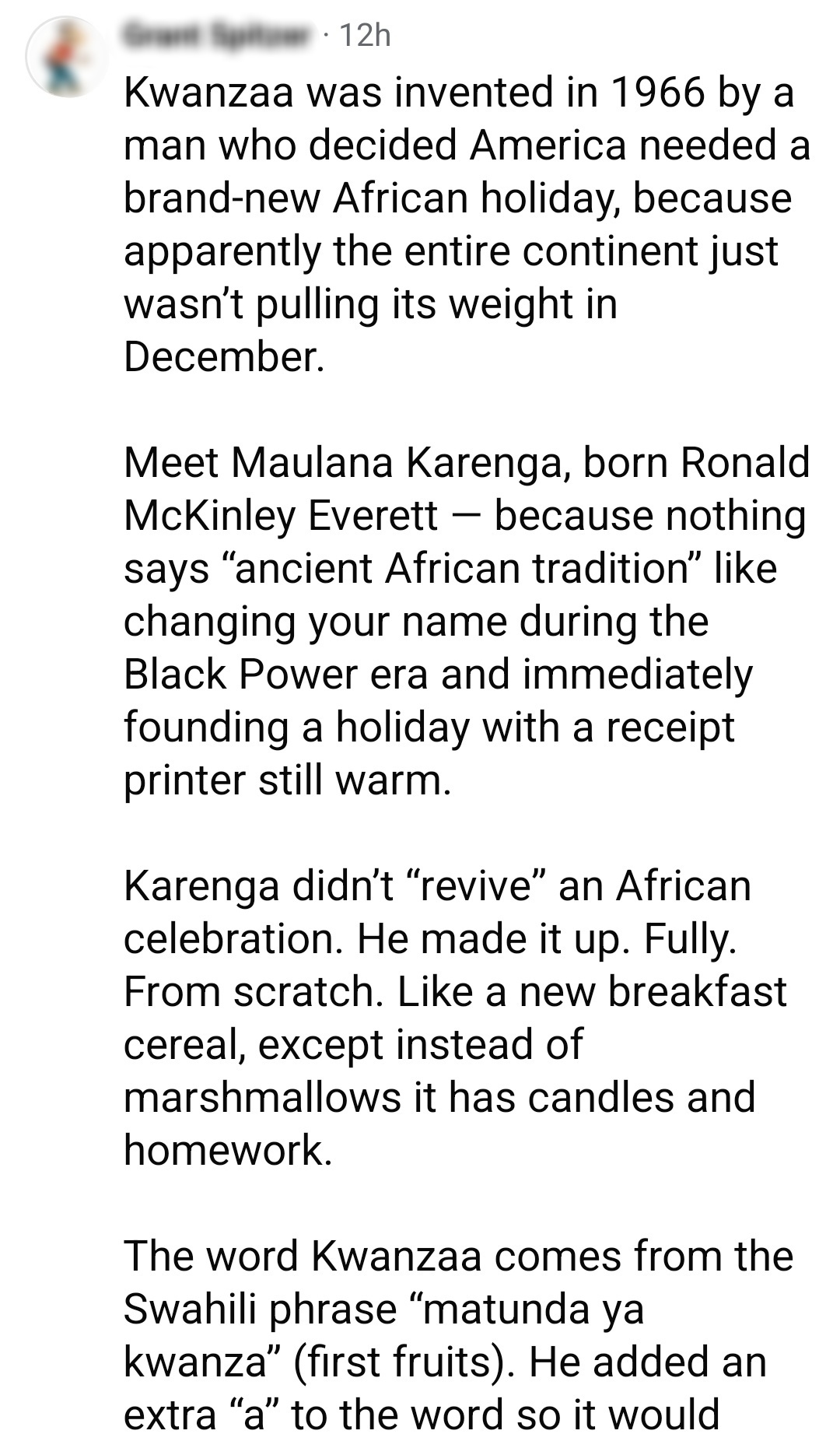
And again….
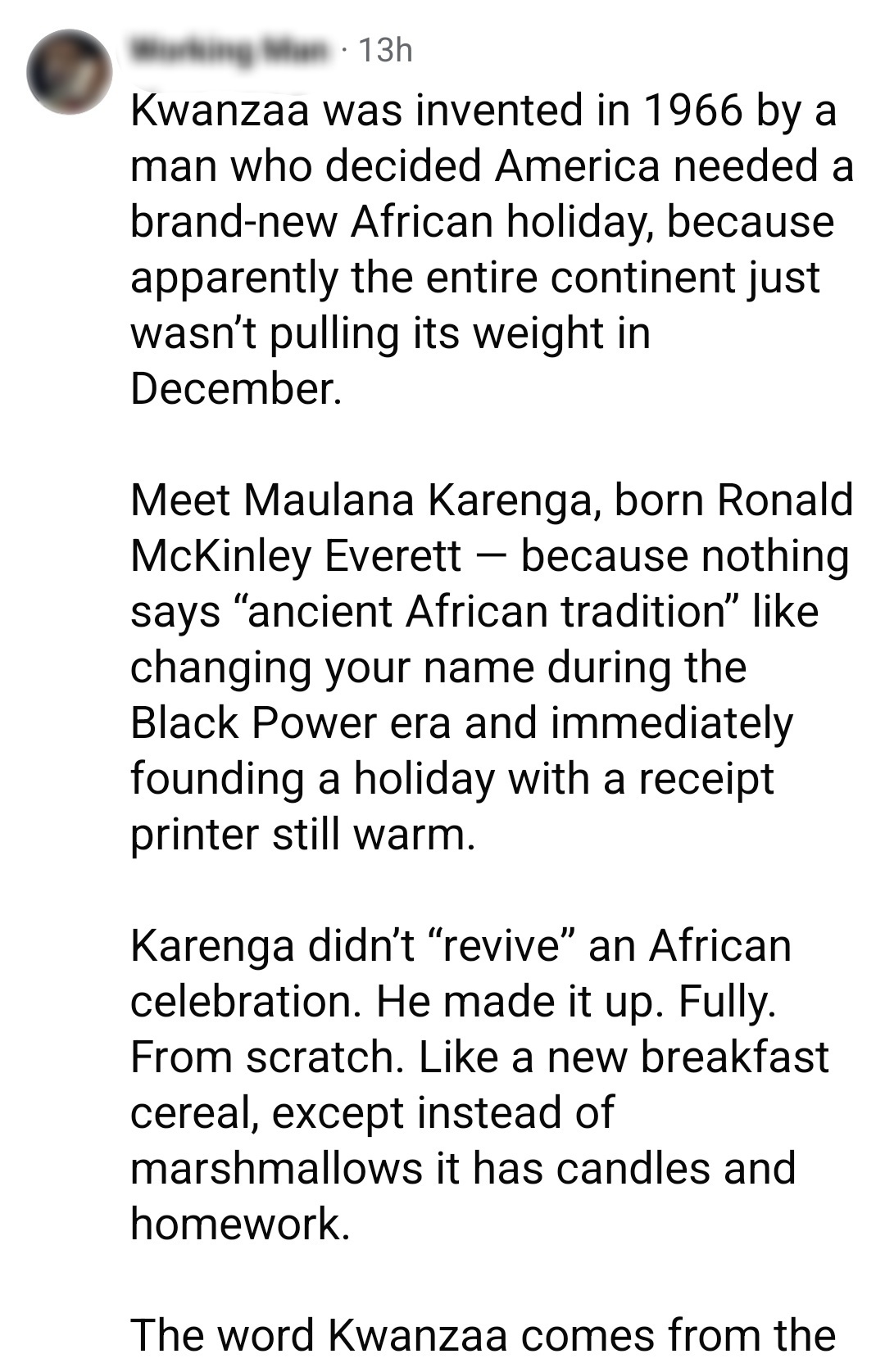
What was striking wasn’t just the sheer volume of comments—many of which were hostile—but the pattern they formed. As joyous Kwanzaa posts and vibrant images filled timelines, a discordant undercurrent appeared in the comment streams: a cluster of voices questioning the legitimacy of the holiday, dismissing its cultural significance, and disparaging those who chose to celebrate and educate.
In isolation, these comments might be written off as highly uninformed and/or insensitive. But within the context—with dozens of similar interactions across other posts, with rapid timing and repeated themes—they fit a pattern we’ve seen elsewhere: the coordinated amplification of hostility aimed at minority cultural expressions. In recent years, researchers examining social media trends have documented how bot networks and organized accounts driven by white supremacist ideologies often coalesce around moments that celebrate cultural diversity, turning what should be spaces of affirmation into arenas of debate and derision.
The Anatomy of the Trend (Black people don’t burn churches)
The poisoning of black spaces is no phenomenon. Since the Reconstruction Era to Civil Rights, the campaign to disrupt connection and unity in the black community has been unrelenting. With regularity, trolls, bots and agitators pry and invade black web spaces to harass, confuse and corrupt social media users and their viewpoints.

1964. James Brock, the manager of the Monson Motor Lodge, pours acid into a pool, trying to disrupt swimmers who were protesting the hotel’s whites-only policy.
Users and bots buzz around black digital spaces with the “Get over slavery,” or “Go back to Africa” posts devaluing the plight, practices and opinions of other communities. Documented history is twisted into distorted talking points, lies and conflation, as the constant confrontations drag on logical thought and clairvoyance. But the orchestration, coordination, repetition, and persistence of these posts have become increasingly staggering.
These methods of harassment are no different from the constant pressure of racial violence during the Civil Rights era. Beatings, burnings, hangings, bombings, “all the regular,” but in the modern digital space, the mechanics of the white supremacist agenda have become a churning cog of repeated talking points appearing in quick succession without nuance. Phrases like “fake holiday” or “made-up tradition” echo across unrelated posts, as if copied and pasted. Multiple accounts comment with similar language within minutes, a hallmark of automated or semi-automated posting behavior. The proliferation of this politically fueled vitriol across the digital landscape is contorting common sense and critical thinking with insensitive and divisive commentary.
These disruptions aren’t random. They tend to target symbols of cultural pride — Rather than engaging with factual content about Kwanzaa’s principles (unity, self-determination, collective work and responsibility), the remarks often attack the idea of cultural celebration itself.

For roughly 200 years (late 1700s), the practice of black church burning has been a tactic of terror by the KKK and white supremacists.
Studies on online harassment have found that bot networks and coordinated groups amplify divisive content because it drives engagement—and engagement, in turn, feeds algorithmic visibility. In environments where outrage is rewarded with visibility, these voices can seem louder than they are. That doesn’t make them legitimate—just amplified.
Why This Matters
To dismiss these incursions as “just the internet” is to ignore the broader social impact. For many people of African descent and others who value cultural pluralism, this is not just background noise—it is a repeat of the larger cultural erasure and delegitimization that Kwanzaa was established to counter. The holiday, rooted in Nguzo Saba (the Seven Principles), exists to promote unity and cultural affirmation—not to provoke debate about its validity. Moreover, harassing narratives don’t stay confined to comment threads. They seep into broader public perceptions and can discourage open expression.

J. Edgar Hoover is the architect of misinformation campaigns structured to discredit and disrupt communities of color.
Just like the historical church burnings since slavery, or the COINTELPRO program meant to “expose, disrupt, misdirect, discredit, or otherwise neutralize” political groups and Civil Rights leaders; the festering swarm of social media attacks are “fear tactics” being utilized by both domestic extremists, and foreign bot farms feeding on the engagement to degrade communal cohesion.
Fight the Trend!
Responding to this pattern requires both individual action and community-level strategy.
1. Educate, don’t escalate
When engagement is rooted in misinformation, factual, calm responses work far better than emotional rebuttal. Sharing reputable sources that explain Kwanzaa’s history, its principles, and its role in African-American cultural life can shift the conversation. For example:
-
Clarify common misconceptions about the holiday’s origins.
-
Highlight voices from practitioners and scholars who can speak to its meaning.

The saturation of weaponized and recycled narratives is the function of propaganda. Bots and automated trolls help to spread dissent and misinformation on a mass scale.
2. Recognize and report coordinated behavior
Platforms increasingly allow users to report:
-
Accounts that post identical comments repeatedly.
-
Accounts that clearly mimic automation.
-
Harassment or hate speech targeting protected groups.
Using reporting tools helps AI moderation systems better identify harmful patterns.
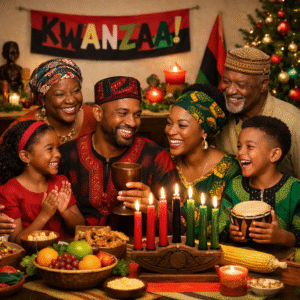
Umoja (Unity), Kujichagulia (Self-Determination), Ujima (Collective Work and Responsibility), Ujamaa (Cooperative Economics), Nia (Purpose), Kuumba (Creativity), Imani (Faith)
3. Lift up safe narratives
Counter-narratives grounded in respect, curiosity, and cultural appreciation dilute the impact of harassment. Encourage posts that:
-
Celebrate the Seven Principles (Umoja, Kujichagulia, Ujima, Ujamaa, Nia, Kuumba, Imani) with personal reflections.
-
Invite questions framed in genuine curiosity—not confrontation.
-
Share positive educational visuals and activities.
- Be proud of your cultures and traditions. Practice them openly and include others in your festivities.

Become adept to identifying and deflecting online attacks, racism, and depravity.
4. Support digital literacy
Statistical evidence from many digital civics studies shows that when users understand how social platforms reward engagement, they’re better equipped to spot manipulation. Workshops, toolkits, or even simple guides on:
-
Recognizing bot behavior
-
Verifying sources
-
Using platform controls
…empower communities to take back their spaces.
What Data Suggests
While comprehensive platform-wide statistics are guarded by the companies themselves, independent research has consistently found trends like:
-
Coordinated inauthentic behavior often spikes around cultural holidays and political events.
-
Automated or semi-automated accounts disproportionately contribute to negative sentiment.
-
Diversity-affirming content tends to receive more organic support when contextualized with education and personal storytelling.
These aren’t speculative claims—they’re patterns documented in studies of online communicative ecosystems.
A More Respectful Digital Commons
The noise and distractions on Kwanzaa wasn’t just an accidental clash of opinions—it was a synchronized symptom of deeper tensions in how we grapple with culture, identity, and community in digital spaces. When hostile voices dominate comment sections not because they’re right, but because they’re loud and repetitive, we all lose the opportunity for meaningful connection understanding and learning. If we want social media to reflect our values—of respect, curiosity, and shared humanity—we must shape that reality collectively: with education, with patience, and with the refusal to let the loudest voices set the terms of the conversation.


